
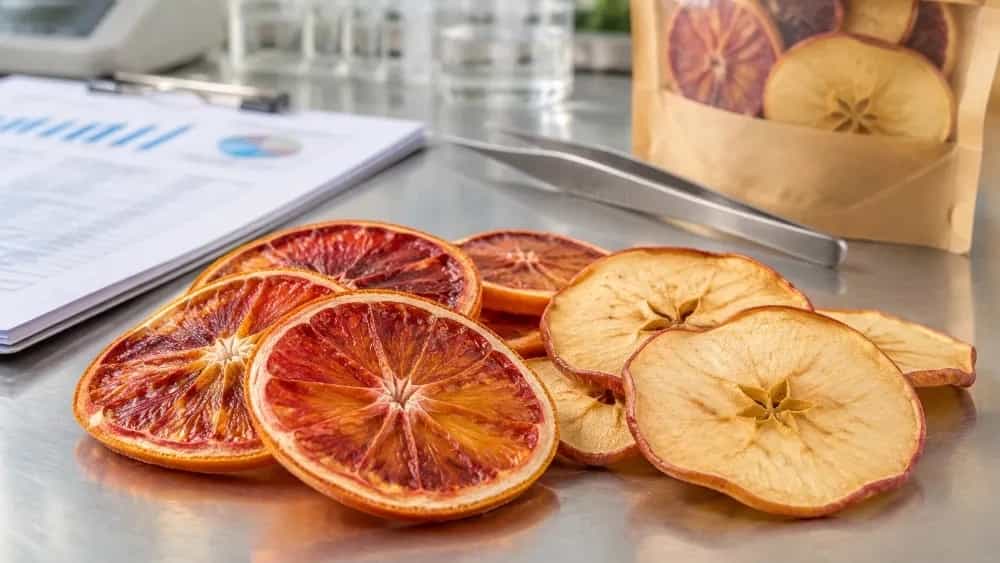
Purchasing real organic dried fruit means receiving a product that has been processed based on laboratory tests without residues of organophosphorus toxins, without sulfur gas (sulfur dioxide below 10 ppm) and with a standard moisture percentage between 12 and 15 percent. Many products on the market appear transparent due to improper drying process or the use of chemical lubricants, but the biological structure of the fruit has been lost. Access to completely natural fruit chips requires a detailed examination of the quality control parameters and its compliance with the valid analysis sheet of the food laboratory.
In practice, it has been observed that most of the buyers see the difference between the traditional workshop dried fruit and the industrial standard product only in its shiny appearance; While this shine is often a sign of using edible paraffin or sodium metabisulfite for false durability. We have repeatedly faced the challenge of distinguishing high-quality fruits from cold storage waste fruits in the production lines and quality checks of Meshgini dried fruit, and field experience shows that the quality of the final fruit depends 100% on the freshness of the incoming fruit from the orchards, not compensatory techniques during processing.
Laboratory indicators for organic dried fruit detection
In order to prove the health of fruit chips, language claims are not effective and only quality monitoring data is used as a criterion. Reputable food industry laboratories measure three basic factors to confirm purity:
Measurement of sulfur dioxide and residual toxins
Sulphuring is common to stabilize the yellow color in crops such as apricots and apples. In the organic dried fruit of Meshgini Jikan, the dehumidification process is carried out under controlled hot air circulation and the amount of sulfur dioxide residues is stabilized close to zero. The conscious consumer prefers the dull color but more lively texture of natural fruit instead of phosphorescent and bright colors.
Management of relative humidity and water activity (Aw)
Challenges of the supply chain and selection of high-quality orchard fruit
Production of natural dried fruit in Iran is facing complex technical challenges, the most important of which is the fluctuation of basic sugar (Brix) of fruits in different regions. The experience of Mashgini Zhikan experts in directly supplying products from horticultural hubs such as Mashginshahr, Urmia Gardens, Yazd and Shiraz has shown that fruits grown at high altitudes have a denser texture and higher Brix due to the difference in day and night temperatures.
Using such fruits completely eliminates the need to add syrup, glucose or white sugar. Meanwhile, many non-specialist producers immerse the fruits in thick syrup before entering the dryer to reduce weight loss during drying; The method that destroys the useful fiber of the fruit and reduces its nutritional value to simple sugar.
Comparison of standard industrial dried fruit and bulk market samples
Shoppers looking for healthy eating, gluten-free diets, or baby nutrition should know the clear line between health and bulk products:
- Texture stability and elasticity: Standard cuts are neither brittle like stone nor too soft and elastic; Rather, they have a natural crispness with tangible fiber.
- Genuine aroma and taste: The absence of synthetic fragrances is immediately apparent by smelling the product envelope; The aroma should be completely similar to the fragrance of gardens.
- Oxygen barrier packaging: Natural fruit without preservatives, if it is not presented in an impermeable package, it will undergo lipid oxidation and quality loss within a few days. With special anti-oxidation packaging and production certificate, Meshgini Zikan prevents the loss of properties during transportation.
Direct order and purchase of Meshgini Zhikan natural dried fruit
Guaranteeing laboratory quality in Mashgini Zhikan store is not just an advertising phrase; Rather, it is offered to buyers all over the country, including Tehran, Tabriz, Isfahan, Karaj, Shiraz and Khuzestan, on the basis of sending fresh cargo, without intermediaries and with the ability to track quality. The variety of single fruit varieties and seasonal mixes are packaged based on hygienic principles, and wholesale and home buyers can personally experience the difference between laboratory products and market samples by comparing the texture and purity of taste.